The best venture capital portfolio management software depends on what “portfolio management” means at your firm. Some VC teams define it as finance-grade tracking, ownership, and reporting that must reconcile to investor statements. Others define it as KPI collection and quarterly LP reporting packs. Many platform and investor relations teams define it as portfolio support: introductions, hiring help, board tracking, and measuring value-add.
This guide compares four options across those realities so you can shortlist the right tool, ask better demo questions, and reduce the spreadsheet and ad hoc reporting workload.
Best for X (quick shortlist)
- FundCount: Best for accounting-backed portfolio management where reporting and investor outputs need to tie back to a real-time general ledger, plus investor portal distribution.
- Rundit: Best for VC portfolio monitoring plus interactive LP reporting and workflows built around dashboards, Excel, and Google Sheets ingestion.
- Vestberry: Best for portfolio intelligence and KPI collection with dashboards, built-in metrics consolidation, and Excel-based LP reporting automation.
- Affinity: Best for relationship-driven portfolio support management, introductions, hiring and fundraising workflows, and reporting on value-add activities.
Key takeaways
- If you need portfolio management outputs to reconcile to accounting and investor reporting, you will want a system-of-record style platform, not only dashboards. FundCount is positioned around integrating portfolio accounting, partnership workflows, and real-time general ledger reporting.
- If your biggest pain is chasing portfolio company KPIs and turning them into repeatable LP-ready packs, shortlist tools that emphasize automated KPI flows, dashboards, and report exports like Rundit and Vestberry.
- Portfolio management often fails because of governance, not software. Validate definitions, approvals, and audit history for KPI changes and report versions, especially when LPs ask “why did this number change?”
- Affinity is better thought of as portfolio support plus relationship intelligence rather than a KPI monitoring database. It can be the operating system for value-add workflows, intros, and reporting impact to LPs.
Quick comparison table: venture capital portfolio management software (2026)
| Platform | Best for | What it’s strongest at | Reporting outputs | Portal / sharing |
| FundCount | Finance-grade portfolio management | Integrated portfolio accounting + real-time GL + reporting + investor portal delivery | Accounting-backed reports, templates, investor statements | Investor portal publishing and distribution |
| Rundit | KPI monitoring + LP reporting | Portfolio monitoring, KPI data flows via Excel/Google, interactive LP reports, dashboards | Online dashboards + PDF/Excel exports, LP reporting | Shareable interactive reports (including no-login sharing) |
| Vestberry | Portfolio intelligence + LP reporting automation | Data consolidation, KPI collection, dashboards, Excel-driven LP reporting workflow | Dashboards + Excel reporting automation and exports | Reporting distribution (tool-dependent) |
| Affinity | Portfolio support management | Relationship intelligence, intro tracking, hiring and fundraising workflows, measuring value-add | Dashboards for portfolio support activity and reporting | Controlled sharing with external collaborators (workflow-dependent) |
This comparison is based on each vendor’s product positioning and described capabilities.
One source of truth behind your portfolio stack
Pair your VC portfolio tool with FundCount for accounting-first reporting and repeatable period-end delivery.
What is venture capital portfolio management software?
Venture capital portfolio management software helps VC firms track portfolio company performance and activity, turn it into repeatable reporting, and support value creation. For some teams, this is KPI collection and dashboards. For others, it includes finance-grade ownership tracking, performance reporting, and investor-ready outputs with governance.
A typical VC portfolio management stack supports:
- Portfolio company KPI collection and normalization (revenue, ARR, cash runway, hiring metrics, and other operating signals).
- Fund and company-level performance tracking (IRR, multiples, fair value marks, and realized/unrealized performance where relevant).
- Repeatable quarterly reporting packs and ad hoc LP questions, with traceability and version control.
- Portfolio support workflows such as introductions, hiring support, and follow-on fundraising help, plus reporting the impact of that support.
- Secure sharing and delivery of reporting through portals or controlled distribution workflows.
Why it matters in 2026
Most VC portfolios are held for years and “portfolio management” becomes an operational system, not a spreadsheet. The practical reality is that you are juggling some combination of:
- Quarterly KPI collection from portfolio companies, often in inconsistent formats.
- Reporting expectations that increasingly reference ILPA and Invest Europe style guidelines, plus brand and formatting expectations from LPs.
- A growing volume of ad hoc investor questions that require speed and the ability to explain where a metric came from.
- A need to track value-add activities (introductions, hiring help, follow-on fundraising support) and show proof of impact.
A good platform reduces the “spreadsheet tax” by centralizing data, enforcing consistency, and making it easier to publish outputs without manual rework.
Must-have features checklist for VC portfolio management
Use this as your evaluation rubric when you shortlist platforms.
1) Data collection and normalization
- Multiple ingestion methods (Excel add-ins, Google Sheets integration, imports, and workflow automation).
- Automated collection workflows and reminders, plus a clear status view of what is missing.
- Validations, variance checks, and audit history of changes so you can answer “why did ARR change?”
2) Monitoring and analytics
- KPI dashboards by company, partner, sector, geography, stage, and vintage (as relevant).
- Ability to consolidate fund-level metrics and company-level metrics without rebuilding spreadsheet webs.
- Clear support for the metrics you actually report (multiples, IRR, fair value marks), and transparency about calculations.
3) Reporting outputs and repeatability
- Refreshable quarterly packs and investor-ready deliverables (online dashboards, PDF, Excel).
- Support for multiple templates per fund or investor segment (because LPs ask for “the same data” in different formats).
4) Governance, security, and permissions
- Role-based access and approvals for changes and publishing.
- Versioning for reports and a defensible correction workflow.
5) Portfolio support workflows (if you define portfolio management this way)
- Introductions, hiring support, board tracking, founder requests, and follow-on fundraising workflows.
- Reporting dashboards to measure and showcase portfolio support activity.
6) Integrations and extensibility
- APIs, exportability, and a practical path to connect your reporting layer to accounting, CRM, and BI tools.
- If finance-grade reporting matters: direct links to custodians and data providers can reduce data entry and reconciliation effort.
Top 4 venture capital portfolio management software options (ranked)
FundCount: Best overall for accounting-backed portfolio management and reporting
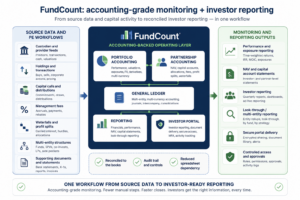
Quick verdict: FundCount is a strong choice when “portfolio management” means more than KPI dashboards. It is positioned around integrating portfolio accounting, partnership workflows, and a real-time general ledger so reporting can stay aligned across entities and investor deliverables.
Best for
- VC firms (and admins) that want portfolio tracking and reporting tied to finance-grade accounting workflows, not maintained separately in spreadsheets.
- Teams that want investor distribution as part of the reporting workflow through an integrated investor portal and bulk personalized statement publishing.
Standout portfolio management capabilities (as positioned)
- Portfolio accounting positioning emphasizes a consolidated platform integrating partnership, tax, investment, and real-time general ledger accounting.
- Connects directly to custodians and market data feeds as part of its portfolio accounting positioning.
- Investor portal is positioned to sit inside the ecosystem so data can flow from accounting engine to investors without manual re-keying, with an “Advanced Report Set” for bulk personalized statements.
- Fund administration positioning includes publishing NAV statements and documents from the reporting workflow, with security controls like encryption and MFA mentioned.
- Data aggregation positioning emphasizes using feeds from custodians and data providers, and supporting instant reporting and automated double-entry accounting.
Pros
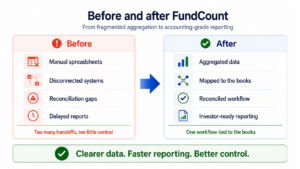
- Strong “books-to-reporting” story when portfolio outputs must match accounting reality across entities and investors.
- Integrated portal delivery reduces email-based distribution for investor packages and can make quarterly cycles more repeatable.
- Helpful if you want one core system connecting data aggregation, accounting, reporting, and distribution, rather than stitching multiple tools together.
Cons
- If your only goal is lightweight KPI dashboards and you already have fund accounting solved elsewhere, a monitoring-first platform may deploy faster for that narrow use case.
- Accounting-grade implementations reward process discipline. Template governance and data ownership still matter.
Integrations to validate
- Custodian/data provider feed coverage, mapping, and exception workflows (what happens when a feed breaks or a position does not reconcile).
- How reporting templates are managed and refreshed, and how portal publishing is controlled (approvals, permissions, versioning).
Pricing
- Quote-based (validate modules, number of entities/funds, portal requirements, and implementation scope).
Demo questions to ask
- “Show me a quarterly close-to-report flow: how data comes in, how it reconciles, how reports are generated, and how investor packages are published to the portal.”
- “Pick one metric in an investor report and trace it back to underlying data, including approvals and audit trail.”
- “Demonstrate bulk personalized statement publishing using the Advanced Report Set and explain how templates and investor-specific logic are governed.”
- “Show how multi-entity structures are handled and what consolidated reporting looks like across related vehicles.”
Faster closes and cleaner LP reporting
FundCount streamlines close and reporting workflows so your team can communicate results with confidence.
Rundit: Best for VC portfolio monitoring plus interactive LP reporting
Quick verdict: Rundit positions itself as AI-powered portfolio management and monitoring for VCs and PEs, with automated data flow via Google integration and Excel import, plus interactive LP reporting that can be shared as dashboards and exported to PDF or Excel.
Best for
- VCs that want a “one place” portfolio monitoring hub with KPI flows, dashboards, and repeatable LP reporting deliverables.
- Teams that rely on Excel and Google Sheets for data workflows and want better structure without abandoning familiar tools.
Standout portfolio management capabilities (as positioned)
- Portfolio management and monitoring positioning includes tracking portfolio performance with automated data flow via Google integration, Excel import, and AI-powered data collection.
- Instant calculations for IRR, multiple, and other key metrics at company or fund level are mentioned on the product page.
- Reporting and LP communications positioning includes LP reports aligned with Invest Europe and ILPA guidelines, personalized branding, and multiple output formats.
- Interactive report sharing is positioned as “online dashboards, no login required,” and includes engagement analytics.
- Integrations section mentions an Excel add-in that supports uploading and downloading portfolio, fund, and KPI data, with automation for routine imports.
- FAQ section describes importing company metrics via Google Sheets integration or an Excel import tool and mentions that KPI sync can be automated when data integration is activated.
Pros
- Strong option for VC teams that want LP reporting outputs and dashboards from a central tool, especially if they export to Excel or PDF frequently.
- Clear focus on automating the collection and reporting cycle so teams spend less time compiling slide decks and spreadsheet tabs.
Cons
- Validate governance and audit trail depth for KPI changes and corrections, especially if numbers are used in formal LP reporting.
- If you need reporting that reconciles to accounting and investor statements, validate how Rundit fits with your accounting system of record.
Integrations to validate
- Google Sheets integration and Excel add-in: how mappings work, how errors are surfaced, and what the workflow is for exceptions.
- Export requirements: whether you can match your existing quarterly pack format and maintain consistent templates across funds.
Pricing
- Rundit states pricing depends on fund size and needs, and mentions a personalized quote and a 7-day trial after requirements review.
- “Show the end-to-end KPI collection flow: data ingestion, validations, approvals, and what the audit history looks like when a KPI changes.”
- “Can you produce our quarterly LP pack in three formats: interactive dashboard, PDF, and Excel, without manual copy and paste?”
- “Show how the Excel add-in works for routine imports and updates, and how you avoid inconsistent KPI definitions across companies.”
- “Show engagement analytics for shared reports and explain what is visible to stakeholders when there is no login.”
Vestberry: Best for portfolio intelligence, KPI consolidation, and Excel-based LP reporting automation
Quick verdict: Vestberry positions itself as portfolio intelligence software for venture capital, focused on consolidating portfolio-related data into a robust database, producing interactive dashboards, and fast-tracking LP reporting automation in Excel.
Best for
- VC finance and ops teams that want a single source of truth for portfolio and fund metrics with dashboards and strong reporting workflows.
- Firms that want Excel-centric reporting automation and bulk data workflows without living in disconnected spreadsheet architectures.
Standout portfolio management capabilities (as positioned)
- Positions itself around consolidating diverse data formats into a portfolio management data architecture and keeping data protected, updated in real time, and accessible to stakeholders.
- Emphasizes fund-level data consolidation and calculating metrics into dashboards, referencing Invest Europe and ILPA guidelines and listing metrics like multiples, IRRs, and fair values at both portfolio company and fund levels.
- LP reporting section describes automating the LP report workflow while maintaining flexibility to customize structure, content, and design, all in Excel, with Invest Europe and ILPA compliance language used.
- Excel Add-in is positioned to power Excel reports with Vestberry-sourced data, with two-way data flow for bulk updates and smart functions for loading metrics, KPIs, and ownership metrics.
- Excel Add-in positioning also mentions one-click exports of structured datasets (fund and portfolio snapshots, performance metrics evolution, cap table snapshots, and more).
Pros
- Strong fit when your team wants a single data layer for portfolio metrics and reporting, but still wants to deliver in Excel formats that LPs and partners expect.
- Good option for reducing the complexity of interlinked spreadsheets by consolidating data and automating metric calculation and reporting workflows.
Cons
- Excel automation is only as good as your governance. Validate how KPI definitions are standardized and how changes are tracked across time and across funds.
- If you need outputs to tie to accounting and investor statements, validate the integration and reconciliation model with your accounting system of record.
Integrations to validate
- How data enters the platform from portfolio companies and internal systems, and what the validation and exception workflow looks like.
- Excel Add-in workflows: permissions, bulk updates, and how you ensure “source of truth” stays consistent when Excel is used heavily.
Pricing
- Quote-based (validate implementation, data migration, reporting template setup, and support model).
- “Show how you consolidate portfolio company data across different formats and how you validate anomalies before it hits dashboards.”
- “Demonstrate your LP reporting workflow in Excel: template setup, refresh process, and how you customize structure/content for different LPs.”
- “Show the Excel Add-in two-way data flow for bulk updates and explain how you prevent version conflicts.”
- “Pick one KPI (ARR, runway, headcount) and show audit history across quarters, including notes and context for changes.”
Affinity: Best for relationship-driven portfolio support and value-add workflow tracking
Quick verdict: Affinity is primarily a relationship intelligence platform for private capital, but it also positions specific workflows for portfolio support and management. If your portfolio management motion is about introductions, hiring, follow-on fundraising support, and measuring the impact of value-add, Affinity can be a practical operating layer.
Best for
- VC platform teams that run portfolio support at scale and need a system to track requests, intros, and outcomes.
- Firms that want automated activity capture and a shared relationship map across the team to support outreach to founders, portfolio companies, and LPs.
Standout portfolio management capabilities (as positioned)
- Portfolio support workflow page positions Affinity for helping portfolio companies succeed through introductions, hiring support, and growth initiatives.
- Highlights tracking co-investor activity and surfacing stronger introduction paths to support follow-on fundraising.
- Positions reporting dashboards to showcase the results of portfolio support activities to founders and LPs, including tracking status and outcomes of founder requests.
- Mentions using “Collaborator Seats” to securely share relevant data with stakeholders and improve LP reporting.
- Activity capture is positioned to automatically create and maintain the firm’s network via email and calendar event sync, building a relationship map and reducing manual data entry.
- Affinity Analytics is positioned as an interactive reporting tool to surface insights and track trends for venture capital workflows.
Pros
- Strong for portfolio support motions that are inherently relationship-driven, where the “portfolio management” output is intros, hires, and investor connections.
- Automated activity capture can reduce CRM hygiene burden and increase adoption across the investment team.
Cons
- If you need KPI dashboards, valuation marks, and LP performance reporting in a single database, Affinity is not positioned as a monitoring-first platform.
- You may still need a dedicated reporting or accounting layer for investor-ready financial reporting.
Integrations to validate
- Activity capture scope: email/calendar systems supported, and how permissions and privacy are handled.
- How Affinity data feeds into your reporting stack (exports, BI, or downstream investor reporting processes).
Pricing
- Quote-based (validate seats, workflow needs, and analytics/reporting tier).
- “Show a real portfolio support workflow: founder request comes in, you identify best intro paths, you track outcome, and you report impact.”
- “How do you measure portfolio support impact and generate LP-friendly reporting dashboards?”
- “Demonstrate automated activity capture and how it keeps company and contact records current without manual entry.”
- “If we need to share curated lists with founders or stakeholders, show the permissioning model and how you control visibility.”
How to choose the right VC portfolio management software
Use this fast decision path to narrow the shortlist.
Do you need portfolio management outputs to reconcile to accounting and investor statements?
- Yes: prioritize FundCount first, because it is positioned around integrated portfolio accounting, partnership workflows, and real-time general ledger reporting, plus investor portal delivery.
- No: go to (2)
Is your number one pain KPI collection and turning it into repeatable LP reporting packs?
- Yes: shortlist Rundit and Vestberry and validate ingestion, validations, and template refresh workflows.
- No: go to (3)
Is your portfolio management motion mainly portfolio support and relationship-driven value creation?
- Yes: shortlist Affinity for intros, hiring support, follow-on fundraising workflows, and impact reporting.
- No: revisit the checklist. Your requirements may be more about governance, templates, or integrations than the platform label.
FAQs
What is venture capital portfolio management software?
It is software that helps VCs track portfolio company performance and activity, consolidate KPIs, produce reporting outputs, and manage portfolio support workflows like introductions and hiring. Different tools emphasize different parts of that problem.
What’s the difference between VC portfolio management software and a CRM?
A CRM is usually optimized for relationships, deal flow, and communications. Portfolio management tools are typically optimized for KPI collection, performance tracking, and repeatable reporting outputs. Some platforms like Affinity sit closer to the CRM side but provide portfolio support workflows.
Can these tools replace spreadsheets entirely?
Sometimes, but many VC teams still keep Excel for ad hoc analysis. The best tools reduce the spreadsheet workload by making KPI collection, metric consolidation, and standard reporting packs refreshable instead of rebuilt each quarter.
What metrics should VC portfolio management software track?
That depends on your strategy, but many firms track a mix of portfolio company operating metrics (like ARR, growth, burn, runway) plus fund-level metrics (multiples, IRR, fair values). Validate which metrics your tool calculates automatically and how it documents calculation rules.
Do I need an investor portal?
If you want secure, self-serve access to reports and statements and a controlled distribution workflow, a portal can reduce manual effort and wrong-version risk. FundCount positions portal publishing as part of the reporting workflow.
What should I ask vendors to demonstrate in a live demo?
Ask for a full quarterly cycle: collect KPIs, validate, approve, generate quarterly pack, deliver outputs (portal or share links), then show audit trail for a KPI change and how report versions are controlled. Rundit and Vestberry explicitly position end outputs across dashboards, Excel, and PDF.
What is the biggest implementation risk?
Not software, but governance. If KPI definitions are inconsistent across portfolio companies and funds, dashboards become argument generators. Make template ownership, definitions, and approval workflows explicit in implementation.
Methodology and last updated
Last updated: February 26, 2026.
How this list was built
- Focus: tools positioned for VC portfolio management, including KPI monitoring, reporting outputs, portfolio support workflows, and (where relevant) accounting-backed reporting.
- Evaluation lens: data collection workflow, reporting repeatability (dashboards, Excel, PDF), governance and auditability, integration posture, and whether the platform can serve as a finance-grade system of record.
Sources: vendor documentation and product pages describing the capabilities referenced above.