AI-Powered Alternative Investment Software
Your alternatives data arrives as PDFs. Stop re-keying it.
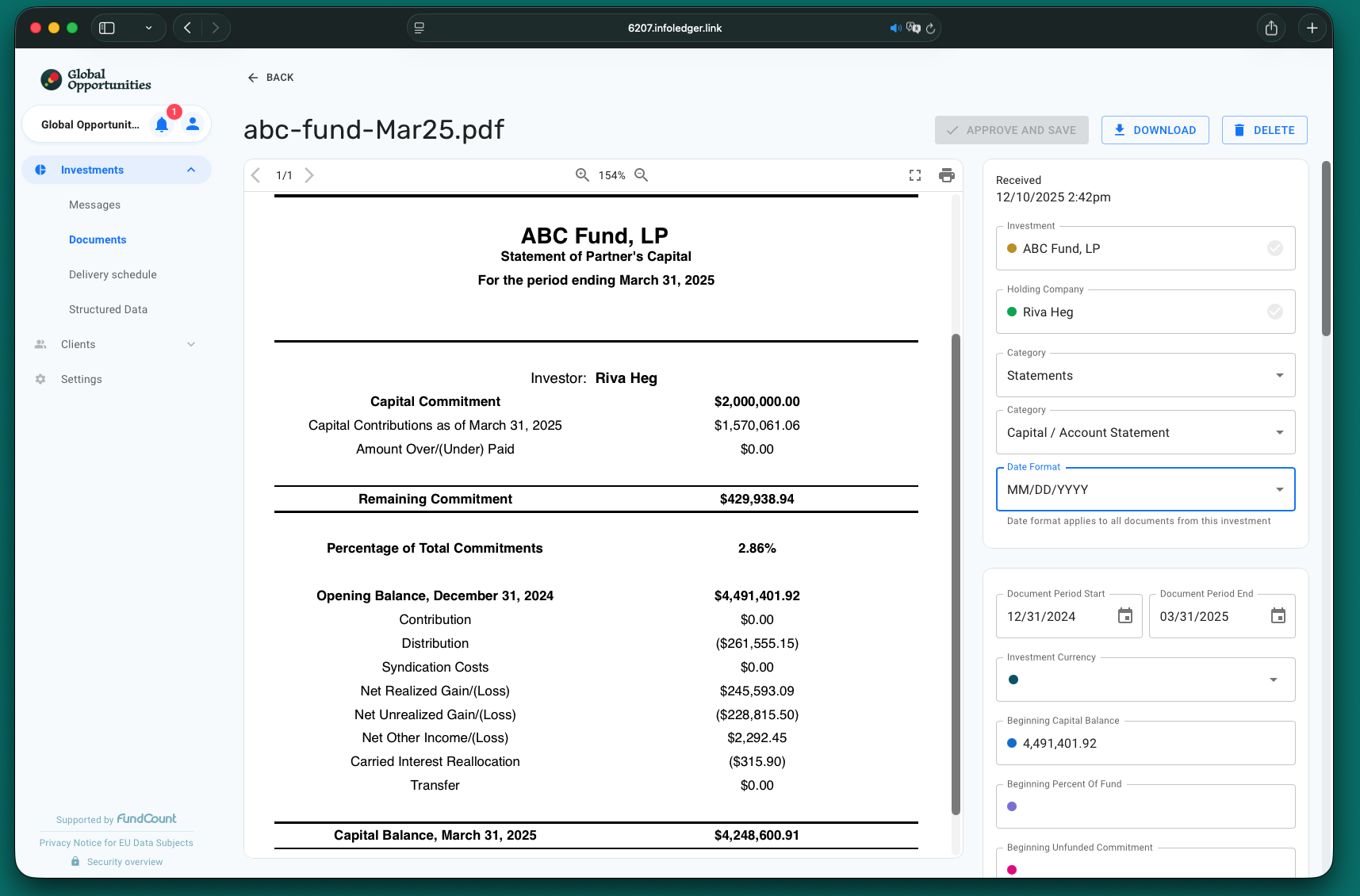
Capital calls, distributions, capital-account and co-investment statements, and invoices arrive as PDFs in a dozen formats. FundCount collects them from your investor portals, converts them into accounting-ready data, and posts it straight to your books — source document one click away.






Real client stories — read the case studies →
From investor-portal download to posted entry — one automated pipeline.
FundCount automates the most laborious part of the back office end to end: it collects statements and notices as they land, converts the unstructured documents into accounting-ready data, values co-investment holdings, reconciles the cash, and posts the result to your books — with the source document one click from every figure.
Collect
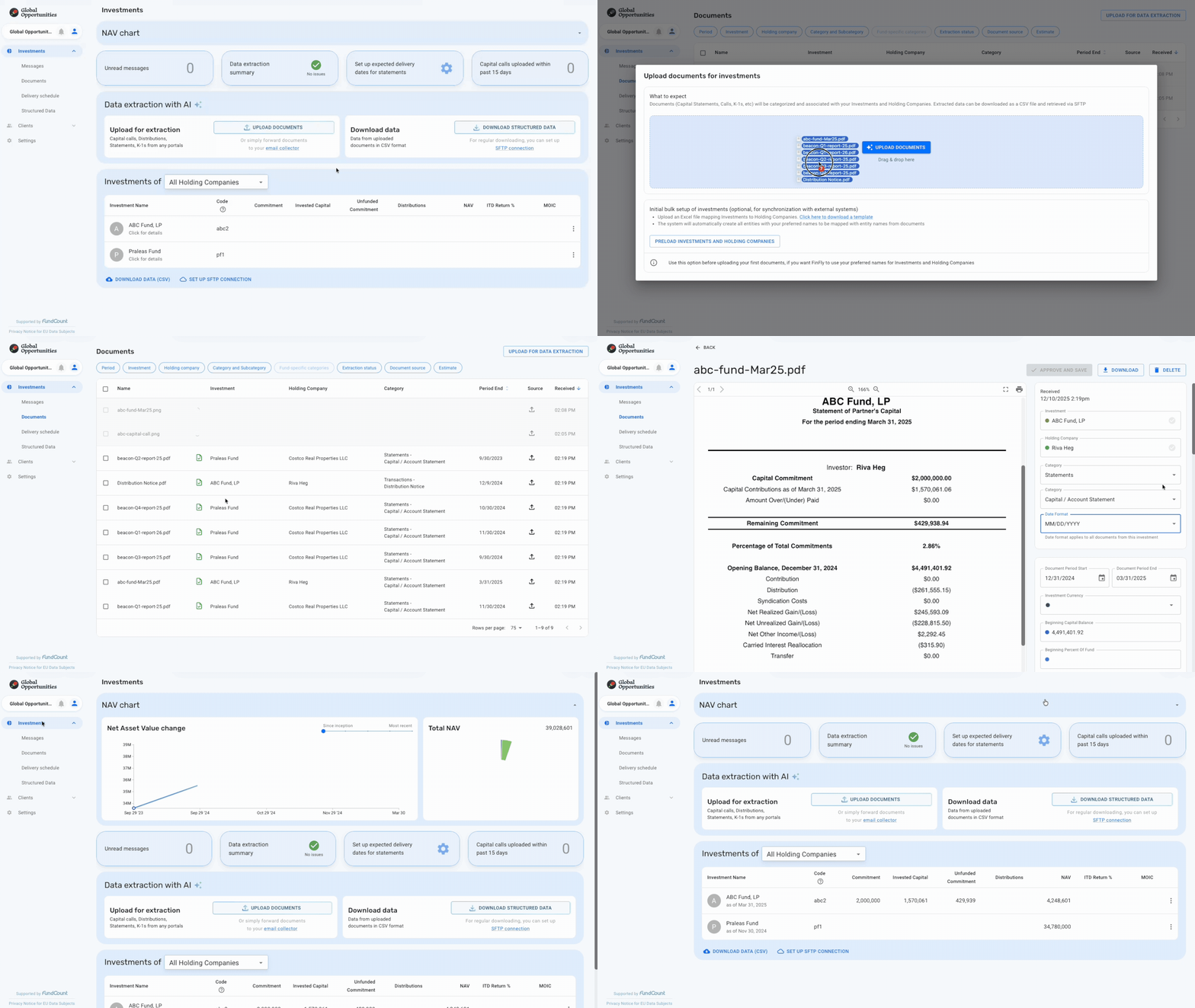
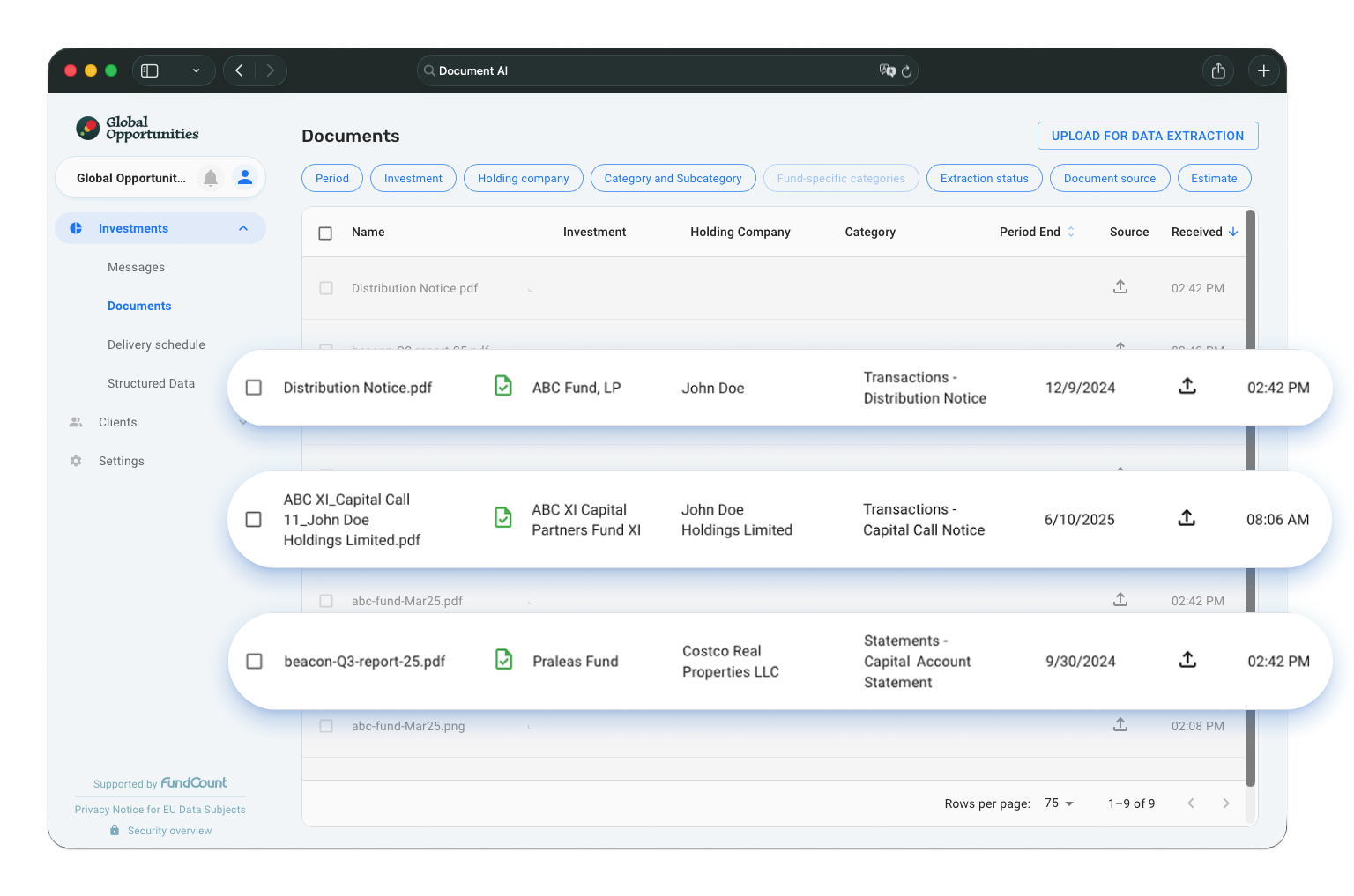
Monitors email notifications and your investor portals, downloads statements and notices automatically, and hands them to extraction — you review errors on an exception basis.
Auto-downloadExtract
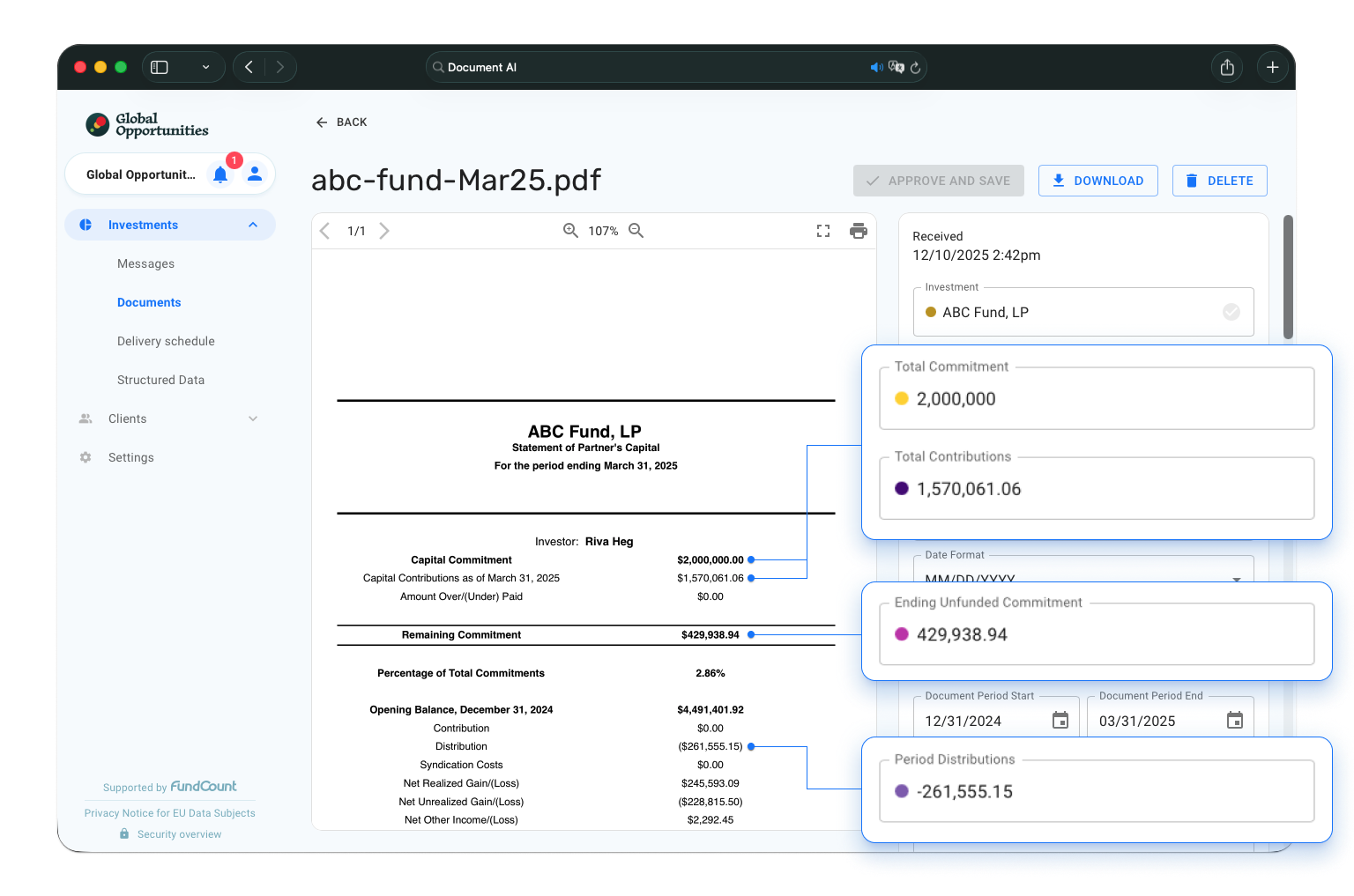
Converts unstructured PDFs — capital calls, distributions, capital-account and co-investment statements, invoices — into structured, accounting-ready data across formats it has never seen.
Value
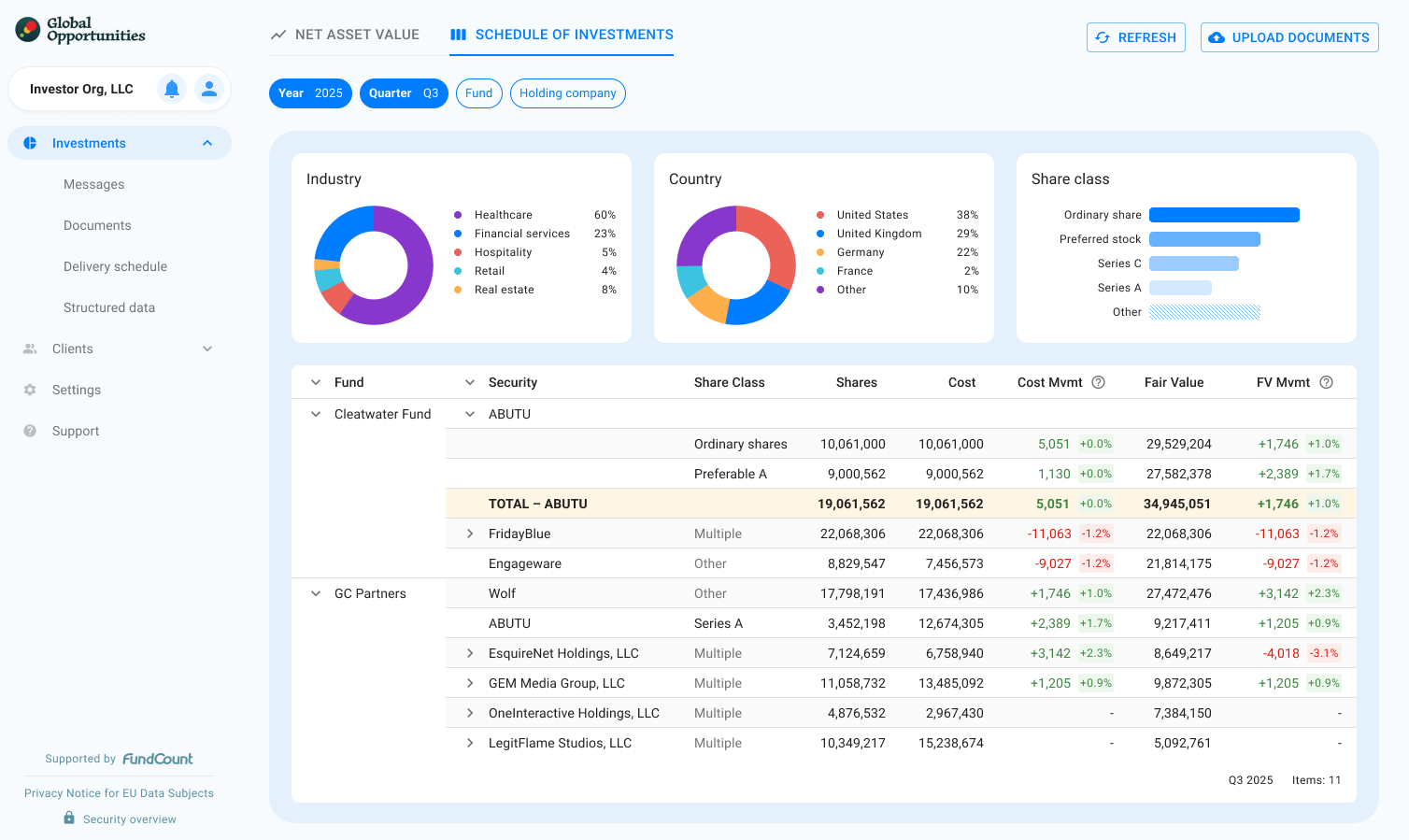
Reads data points from co-investment Schedules of Investments — investments, cost, shares, fair value — and calculates valuations.
Reconcile
Matches bank statements to capital calls, distributions, and invoices, enriches records with payment dates and amounts, and flags unmatched items for review.
Post
Accounting-ready data feeds into FundCount — or your other accounting system — with the original document one click away from the posted record.
To the ledgerSee it read a real statement, live on the call.
Watch FundCount turn a representative GP statement — a capital call, distribution notice, or K-1 — into posting-ready data, end to end. No setup, nothing required from your side.
Automate the back office, from collection to posted entry.
FundCount automates the most laborious parts of alternative-investment operations: collecting documents as they arrive, converting unstructured reports into accounting-ready data, valuing co-investments, and reconciling cash — all inside the same platform that runs your accounting and reporting, so figures flow straight through without leaving the system.
Automate data collection end-to-end
Stop logging into a dozen investor portals and inboxes. FundCount monitors email notifications, downloads statements and notices automatically, and hands them straight to extraction — your team reviews errors on an exception basis instead of doing the collection by hand.
- ✓Monitors portals and email notifications automatically
- ✓Downloads statements and notices, then routes them to extraction
- ✓Exception-based error review — not manual downloading
Convert unstructured reports into accounting-ready data
A rich set of book and tax data points is extracted from capital calls, distributions, capital-account statements, and co-investment financials into one standardized format. For co-investments, FundCount reads the Schedule of Investments — investments, cost, shares, fair value — and calculates valuations, all on a dashboard your team or clients can review in real time.
- ✓Funds and direct co-investments captured side by side
- ✓Values Schedules of Investments — cost, shares, fair value
- ✓One standardized format on a real-time review dashboard
Reconcile cash and catch missed payments
FundCount matches your bank statements to capital calls, distributions, and invoices, enriches existing records with payment dates and amounts, and flags unmatched items for review — so invoices get processed faster and missed payments surface instead of slipping through.
- ✓Matches bank statements to calls, distributions, and invoices
- ✓Enriches records with payment dates and amounts
- ✓Flags unmatched items so missed payments get caught
Look through to the holdings behind your funds
FundCount extracts the Schedule of Investments from your GPs’ financial statements, giving you each underlying holding’s industry, country, share class, shares, cost, and fair value. Track how positions move quarter to quarter, and run look-through analysis to see your exposure to the same company across different GPs.
- ✓Extracts asset-level holdings from GP financial statements
- ✓Tracks quarter-over-quarter movements in cost and fair value
- ✓Shows your exposure to the same security across GPs